

Supercomputer against polarisation on social media
Supercomputer against polarisation on social media
Computer scientist Stefan Neumann and his team study social media networks to understand how algorithms influence users’ opinions: on the ASC, they simulate how filter bubbles and polarisation emerge – and what options there are for influencing this development. What we then do with the results? That is something we, as a society, have to decide for ourselves, says Stefan in this interview. Fascinating.
Bettina Benesch
Stefan, you are researching how recommender systems on online platforms influence polarisation. Prospectively, that is, before these systems are actually deployed. How do you do that?
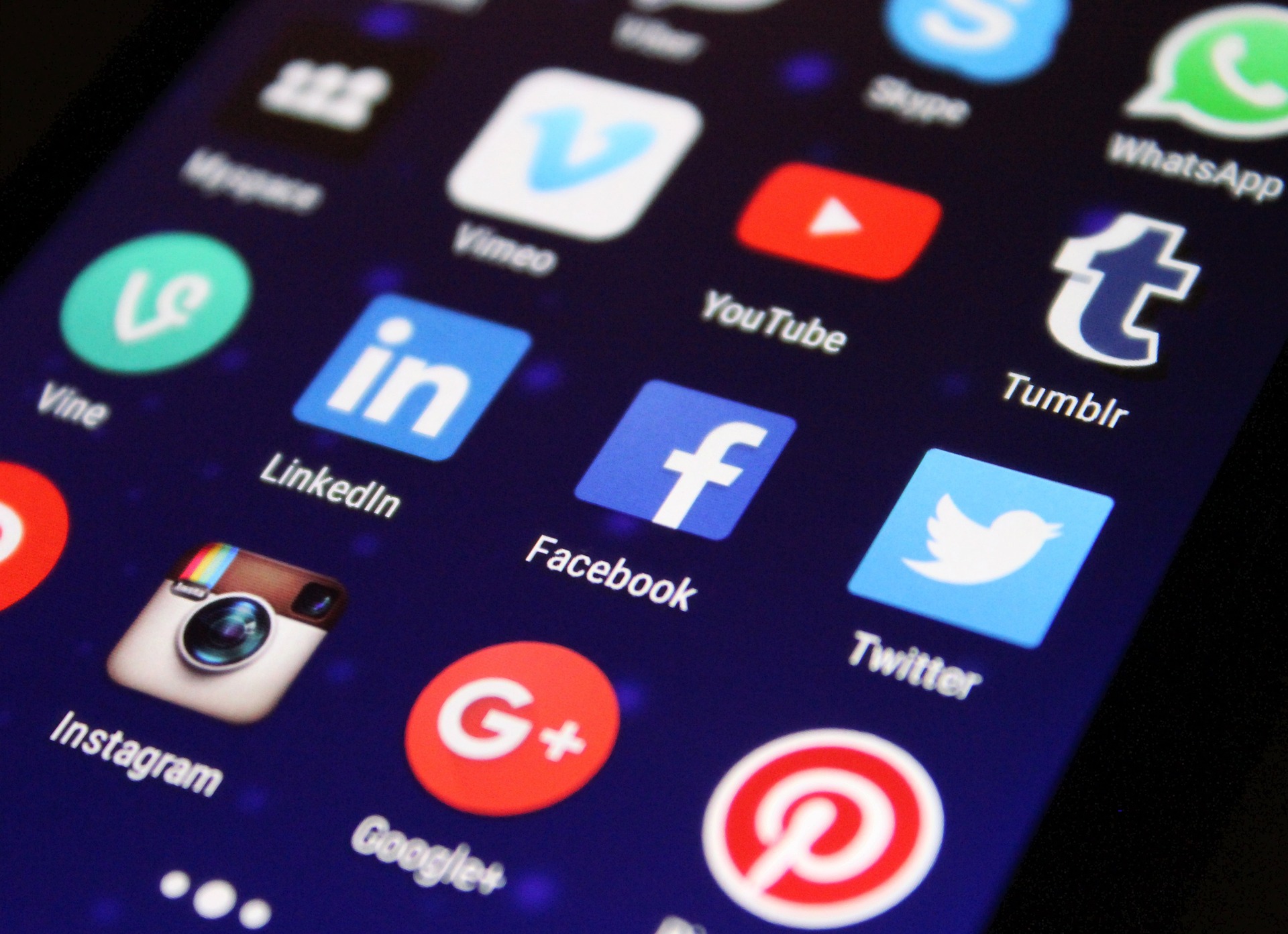
Stefan Neumann: By running different scenarios on a supercomputer. You can imagine it a bit like the simulations during the coronavirus pandemic: data scientists used virus models to see what happens if people stop going to work and stay at home instead – what changes then, and how? We do something similar: we build an abstract model of social media and change a single parameter or several. Then we look at how this affects the polarisation of users.
Why is that important?
Stefan Neumann: Recommender systems in social networks can, for example, play an important role in disinformation campaigns aimed at influencing elections and deliberately manipulating people. We want to understand how recommender systems need to be changed and improved in order to mitigate harmful behaviour.
Essentially, the project has three goals: first, we want to develop theoretical models that explain how recommender systems interact with human behaviour. Second, we want to examine how hostile actors could manipulate a network, and in a third step we investigate how marketing can be personalised, for example, how a product that is polarising can be advertised in a way that is socially responsible. In other words: how do I mostly reach the people who are interested in it and, so to speak, leave everyone else alone?
Your project has been running since 2024. Do you already have initial results?
Stefan Neumann: Yes. For example, we have simulated how opinions can be modified through slight changes in the topics in the timeline. The question was whether this would lead to people becoming less polarised.
“
In the simulation, we only changed the weighting of topics in the timeline by two to three per cent; for example, two per cent more football and three per cent less politics. This had a clear impact on polarisation in the network, in some cases leading to a ten to twenty per cent reduction in polarisation.
„
Would it?
Stefan Neumann: Yes. Even a small change in the weighting of topics leads to relatively large effects. Take a social network like Twitter/X: in our simulation, we built a timeline for each user. Something like: 50 per cent Formula 1, 30 per cent football, 20 per cent politics. Then we asked ourselves: how can we adjust this a little? So just nudging everything up or down by two or three percentage points: two per cent more football, three per cent less politics, for example. We then examined how this affects polarisation within the network.
In the simulation, this led to a ten to twenty per cent reduction in polarisation in some cases. You cannot simply map this model one-to-one onto the real world, but they were still interesting results, showing that there are ways to make social media less polarising, and potentially also help to de-radicalise some people.
What exactly did you change in the feed?
Stefan Neumann: If I have a user who is, say, more left-leaning politically, I serve them slightly more content that tends to come from the right – but only just enough that it is still acceptable for them. Because if they reject the content because it is too far to the right, they will of course drop out.
Your results could also be used very effectively to manipulate people. How can that be prevented?
Stefan Neumann: What we would ideally like to end up with is a sort of checklist for algorithms that shows us: these are the properties algorithms need to have in order to do good. We would like to have a set of criteria that policymakers could also refer to and say: okay, at some point these criteria could be incorporated into regulation.
“
What we would ideally like to obtain is a kind of checklist for algorithms that shows us: these are the properties algorithms need to have in order to do good.
„
What actually counts as “good”?
Stefan Neumann: That is precisely what we, as researchers, do not define. At the moment, it is about identifying the dimensions in which such predictions can be made in a meaningful way in the first place. The idea would then be to use these criteria as a basis for a societal and political debate about what is really “good” for us as a society. But first we have to provide the tools to make this debate possible at all.
Let’s get a bit more technical: what makes your project unique from a methodological point of view?
Stefan Neumann: That we approach the topic from a technical/mathematical perspective. That is currently somewhat neglected in research. At the moment, there are many researchers working more on the applied side; they run user studies in which people interact with different algorithms and so on. Our goal is to find a way of understanding, from a theoretical point of view, what we see in real-world data.
“
Why do more people read tabloid media than Der Standard? Tabloids have more emotional topics and more easily accessible headlines. And that is exactly what is amplified by social media.
„
You are also looking at filter bubbles. Are there ways for me, as a user, to escape my filter bubble?
Stefan Neumann: I think the main thing is to be critical about which topics you consume. And if you enjoy that sort of thing, with platforms like Bluesky you can adjust the timeline algorithm yourself and watch how the content changes. What I find missing in this whole debate is the fact that, to a certain extent, it is also human behaviour that is being amplified. Why do more people read tabloid media than Der Standard? Tabloids have more emotional topics and more easily accessible headlines. And exactly that is amplified by social media, even without any algorithm: people who post such content automatically get more attention. And on top of that, there are then algorithms that sometimes reinforce this further. But you can also design these algorithms in such a way that they mitigate this effect in some circumstances.
If you look back on your project in 2031, what would be your indicators that you have been successful scientifically and that your work has also had a societal impact?
Stefan Neumann: I think if by then we have conditions for algorithms that are, on the one hand, theoretically interesting and easy to analyse, and on the other hand sufficiently comprehensible that they can form the basis of a public discussion.
Wordrap
Stefan Neumann completes the following sentences:
Supercomputing is for our work … indispensable.
Research at TU Wien is … fun.
Computer science is … hugely exciting, currently undergoing massive change and set to transform significantly.
A life without social media is … not bad either.
Social networks in 20 years will be … much more diverse and much more fragmented.
About
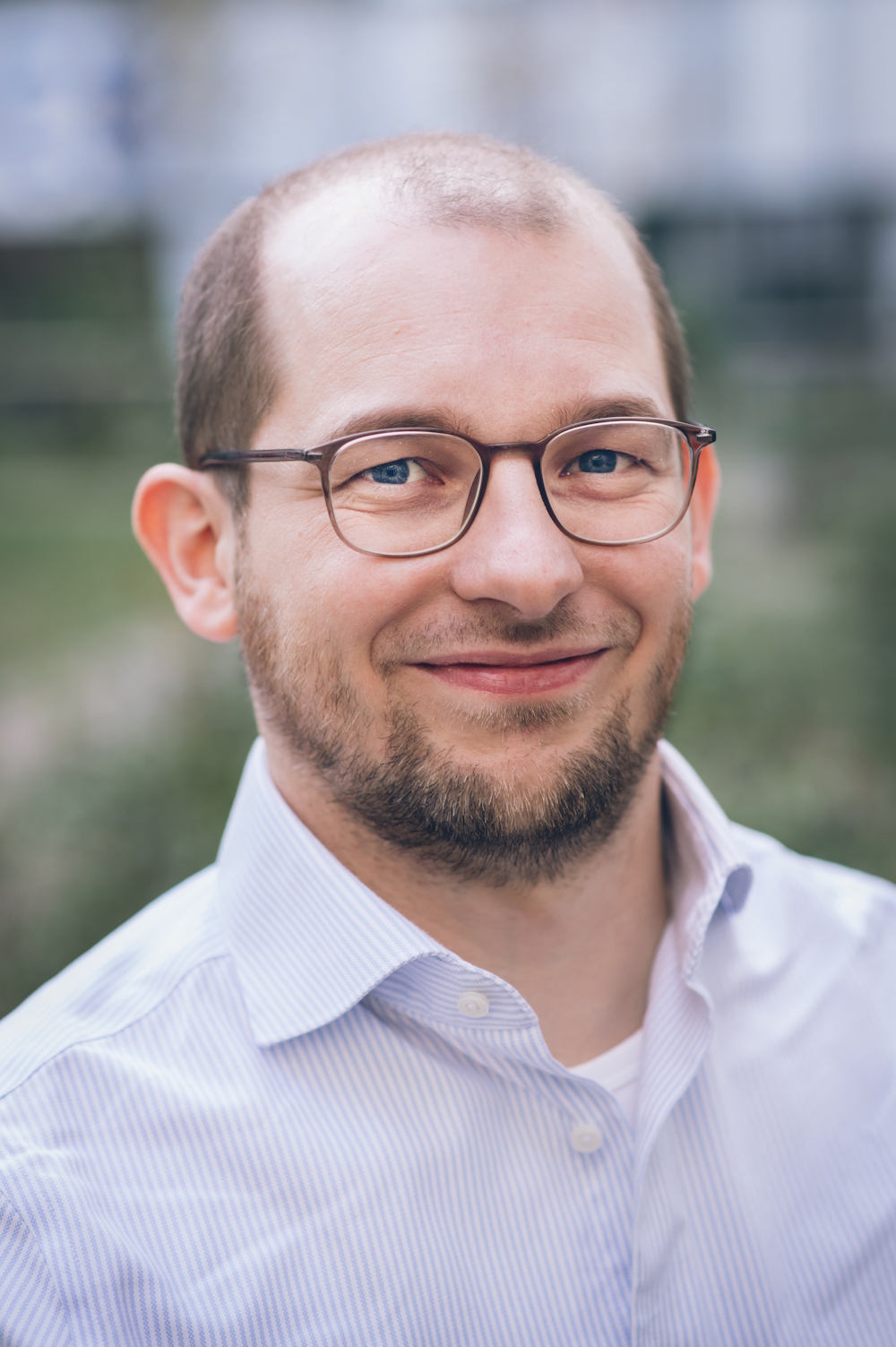
Assistant Prof. Dr.techn. Stefan Neumann, BSc MSc heads a research group at TU Wien funded by the Vienna Science, Research and Technology Fund (WWTF) for the project “Towards Trustworthy Recommendation Systems for Online Social Networks”.
The team develops mathematical models to understand how recommender systems and timeline algorithms in social networks reinforce filter bubbles and polarisation, and how this influence can be predicted and limited even before the algorithms are deployed, including with regard to malicious actors and disinformation campaigns.
In the long term, the results are intended to help policymakers, regulators and industry make social media more responsible, and to target information and advertising campaigns more precisely and in a way that is compatible with societal values.